
Pulmonary Fibrosis Clinical Trial Pipeline: DelveInsight Highlights Major Advances, Transformative Therapies, and 110+ Leading Players Wheeling the Therapeutics Landscape
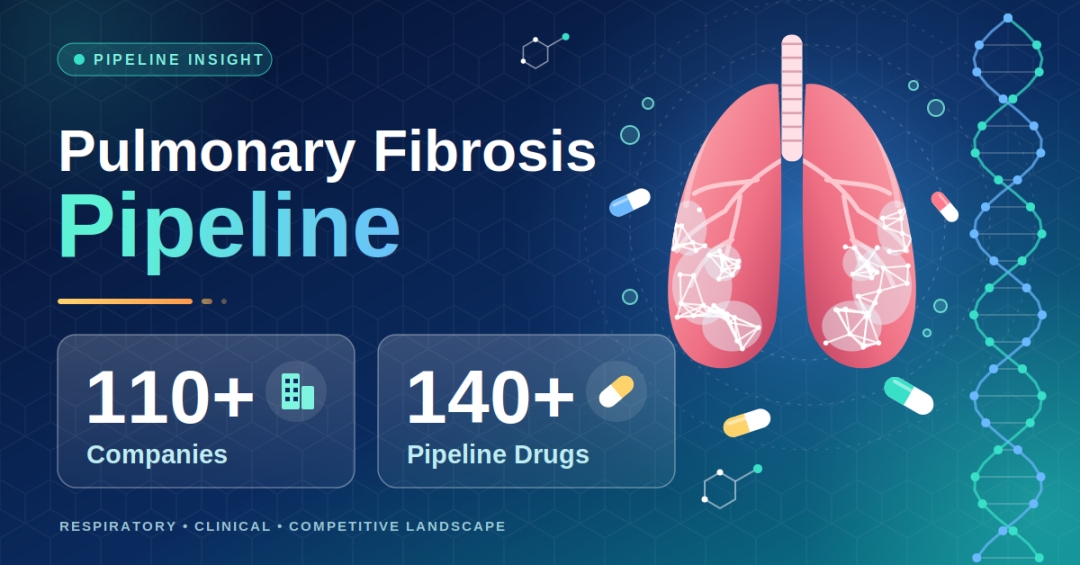
(Albany, US) October 13, 2026, DelveInsight “Pulmonary Fibrosis Pipeline Insight 2026” report provides comprehensive insights about 110+ companies and 140+ pipeline drugs in Pulmonary Fibrosis pipeline landscape. It covers the Pulmonary Fibrosis Pipeline drug profiles, including clinical and nonclinical stage products. It also covers the Pulmonary Fibrosis Pipeline Therapeutics assessment by product type, stage, route of administration, and molecule type. It further highlights the inactive pipeline products in this space.
Discover the latest drugs and treatment options in the Pulmonary Fibrosis Pipeline @ https://www.delveinsight.com/sample-request/pulmonary-fibrosis-pipeline-insight
Key Takeaways from the Pulmonary Fibrosis Pipeline Report
- On October 12, 2026, Bristol Myers Squibb announced positive topline results from the Phase III ALOFT-IPF trial evaluating admilparant, an investigational oral LPA₁ receptor antagonist, in adults with idiopathic pulmonary fibrosis (IPF). The 60 mg twice-daily dose significantly improved the change in forced vital capacity (FVC) at Week 52 compared with placebo, meeting the trial’s primary endpoint. The higher 120 mg dose did not meet statistical significance for the primary endpoint. The company plans to evaluate the full results and engage with regulatory authorities regarding potential submissions.
- On October 08, 2026, Endeavor BioMedicines Inc. announced that its Phase IIb WHISTLE-PF trial evaluating taladegib (ENV-101), an investigational Hedgehog signaling pathway inhibitor, met its primary endpoint and multiple key secondary endpoints in patients with idiopathic pulmonary fibrosis (IPF). The study demonstrated a statistically significant improvement in percent-predicted forced vital capacity (ppFVC) compared with placebo, alongside improvements in lung-fibrosis measures and total lung capacity. The company plans to engage with regulatory authorities regarding Phase III development.
- On October 07, 2026, Mediar Therapeutics Inc. announced the completion of enrollment in its Phase II WISPer clinical trial evaluating MTX-463, an investigational antibody targeting WISP-1, in patients with idiopathic pulmonary fibrosis. The global study enrolled 168 patients across more than 70 clinical sites in North America, South America, Europe, and Australia. The milestone advances the clinical evaluation of a potential new treatment approach targeting the biological mechanisms involved in fibrosis progression.
- DelveInsight’s Pulmonary Fibrosis Pipeline report depicts a robust space with 110+ active players working to develop 140+ pipeline therapies for Pulmonary Fibrosis treatment.
- The leading Pulmonary Fibrosis Companies such as Bristol-Myers Squibb, PureTech Health, Sarepta Therapeutics, Boehringer Ingelheim, Avalyn Pharma, SRN-001, Wuhan Optics Valley Vcanbiopharma Co., Ltd., Syndax Pharmaceuticals, Endeavor BioMedicines, AstraZeneca, Pulmongene Ltd., Agomab Therapeutics and others.
- Promising Pulmonary Fibrosis Pipeline Therapies such as BMS-986278, Pirfenidone, Etanercept, BI 1839100, CNTO 888 1 mg/kg, Nintedanib, Pirfenidoneone and others.
Get insights into Pulmonary Fibrosis Clinical trials, emerging therapies, and leading companies with DelveInsight @ Pulmonary Fibrosis Treatment Drugs
The Pulmonary Fibrosis Pipeline Report provides disease overview, pipeline scenario and therapeutic assessment of the key pipeline therapies in this domain. The Pulmonary Fibrosis Pipeline Report also highlights the unmet needs with respect to the Pulmonary Fibrosis.
Pulmonary Fibrosis Overview
Pulmonary fibrosis is a chronic and progressive lung disease characterized by the excessive accumulation of extracellular matrix (ECM) and remodeling of the lung architecture. This leads to scarring and thickening of the lung tissue, which impairs gas exchange and results in a gradual decline in respiratory function. The disease is clinically recognizable by symptoms such as shortness of breath, chronic cough, and fatigue, with radiographic imaging revealing characteristic patterns of interstitial fibrosis. The pathogenesis of pulmonary fibrosis (PF) involves complex interactions between genetic susceptibility, environmental triggers, and aberrant cellular responses. One of the key features of PF is the dysregulation of wound healing processes. Normally, when the lung is injured, the body activates repair mechanisms involving inflammation, epithelial cell regeneration, and collagen deposition. However, in pulmonary fibrosis, this repair process goes awry. Instead of resolving the injury and restoring normal tissue architecture, the wound healing process becomes chronic, leading to excessive fibrosis. This is believed to occur due to an imbalance in pro-fibrotic and anti-fibrotic signals within the lung. Specifically, the TGF-β (transforming growth factor-beta) signaling pathway, which is central to fibrosis development, is often dysregulated in PF, leading to sustained fibroblast activation, collagen production, and deposition in the lung interstitial space.
Pulmonary Fibrosis Emerging Drugs Profile
- BMS-986278: Bristol-Myers Squibb
BMS-986278 is a potential first-in-class, oral, small molecule lysophosphatidic acid receptor 1 (LPA1) antagonist currently being evaluated as a novel antifibrotic treatment for patients with idiopathic pulmonary fibrosis and progressive pulmonary fibrosis. Increased LPA levels and activation of LPA are involved in the pathogenesis of pulmonary fibrosis. BMS-986278 is a potent and complete antagonist of LPA action at LPA1-mediated Gi, Gq, G12, and β-arrestin signaling pathways in both cells heterologously expressing human LPA1 and in primary human lung fibroblasts. The drug is currently in Phase III stage of clinical trial evaluation for the treatment of pulmonary fibrosis.
- AK3280: Ark Biosciences Inc.
AK3280 is a next-generation broad-spectrum anti-fibrotic molecule optimized from the marketed drug pirfenidone. It has the ability to modulate multiple pathways and biomarkers closely associated with the fibrotic process, including the expression of fibrosis-related genes and proteins induced by transforming growth factor-beta (TGF-B) and lysophosphatidic acid (LPA). AK3280 works by reducing cell proliferation and inhibiting the synthesis and accumulation of extracellular matrix. Compared to pirfenidone, AK3280 offers advantages in safety and tolerability, with potentially much better clinical efficacy. The drug is currently in Phase II stage of clinical trial evaluation for the treatment of pulmonary fibrosis.
- LYT-100: PureTech Health
LYT-100 (deupirfenidone) is currently in development for idiopathic pulmonary fibrosis (IPF), which is a rare, progressive and fatal disease. LYT-100 is a deuterated form of pirfenidone and is designed to retain the beneficial pharmacology and clinically-validated efficacy of pirfenidone with a highly differentiated pharmacokinetic (PK) profile. In multiple clinical trials, LYT-100 has demonstrated a favorable tolerability profile, which may keep patients on treatment longer to enable more optimal disease management. The drug is currently in Phase II stage of clinical trial evaluation for the treatment of pulmonary fibrosis.
- ARO-MMP7: Sarepta Therapeutics
ARO-MMP7 is an investigational RNA interference (RNAi) therapeutic developed by Arrowhead Pharmaceuticals, aimed at treating idiopathic pulmonary fibrosis (IPF) by targeting and reducing the expression of matrix metalloproteinase 7 (MMP7). This protein is implicated in the pathogenesis of IPF, contributing to inflammation and fibrosis in the lungs. The drug is currently in Phase I/II stage of clinical trial evaluation for the treatment of pulmonary fibrosis.
- TRK-250: Toray Industries, Inc
TRK-250, also known as BNC-1021, is a nucleic acid medicine developed by Toray Industries in collaboration with BONAC Corporation. It is designed to treat Idiopathic Pulmonary Fibrosis (IPF). The drug works by selectively inhibiting the expression of transforming growth factor-beta 1 (TGF-β1), a key protein involved in the fibrotic process at the gene expression level. The drug is currently in Phase I stage of clinical trial evaluation for the treatment of pulmonary fibrosis.
- VUM02: Wuhan Optics Valley Vcanbiopharma Co., Ltd.
VUM02 Injection is an innovative therapeutic product developed by Wuhan Optics Valley Vcanbiopharma Co., Ltd. It utilizes human umbilical cord-derived mesenchymal stem cells (hUCT-MSCs). The drug is currently in Phase I stage of clinical trial evaluation for the treatment of pulmonary fibrosis.
Explore groundbreaking therapies and clinical trials in the Pulmonary Fibrosis Pipeline @ New Pulmonary Fibrosis Drugs
The Pulmonary Fibrosis Pipeline Report Provides Insights into
- The report provides detailed insights about companies that are developing therapies for the treatment of Pulmonary Fibrosis with aggregate therapies developed by each company for the same.
- It accesses the Different therapeutic candidates segmented into early-stage, mid-stage, and late-stage of development for Pulmonary Fibrosis Treatment.
- Pulmonary Fibrosis Companies are involved in targeted therapeutics development with respective active and inactive (dormant or discontinued) projects.
- Pulmonary Fibrosis Drugs under development based on the stage of development, route of administration, target receptor, monotherapy or combination therapy, a different mechanism of action, and molecular type.
- Detailed analysis of collaborations (company-company collaborations and company-academia collaborations), licensing agreement and financing details for future advancement of the Pulmonary Fibrosis market
Pulmonary Fibrosis Companies
Bristol-Myers Squibb, PureTech Health, Sarepta Therapeutics, Boehringer Ingelheim, Avalyn Pharma, SRN-001, Wuhan Optics Valley Vcanbiopharma Co., Ltd., Syndax Pharmaceuticals, Endeavor BioMedicines, AstraZeneca, Pulmongene Ltd., Agomab Therapeutics and others.
Pulmonary Fibrosis pipeline report provides the therapeutic assessment of the pipeline drugs by the Route of Administration. Products have been categorized under various ROAs such as
- Oral
- Intravenous
- Subcutaneous
- Parenteral
- Topical
Pulmonary Fibrosis Products have been categorized under various Molecule types such as
- Small molecule
- Monoclonal antibody
- Peptide
- Polymer
- Gene therapy
Learn about new drugs, pipeline developments, and key companies with DelveInsight’s expert analysis @ Pulmonary Fibrosis Market Drivers and Barriers
Scope of the Pulmonary Fibrosis Pipeline Report
- Coverage- Global
- Pulmonary Fibrosis Companies- Bristol-Myers Squibb, PureTech Health, Sarepta Therapeutics, Boehringer Ingelheim, Avalyn Pharma, SRN-001, Wuhan Optics Valley Vcanbiopharma Co., Ltd., Syndax Pharmaceuticals, Endeavor BioMedicines, AstraZeneca, Pulmongene Ltd., Agomab Therapeutics and others.
- Pulmonary Fibrosis Pipeline Therapies– BMS-986278, Pirfenidone, Etanercept, BI 1839100, CNTO 888 1 mg/kg, Nintedanib, Pirfenidoneone and others.
- Pulmonary Fibrosis Therapeutic Assessment by Product Type: Mono, Combination, Mono/Combination
- Pulmonary Fibrosis Therapeutic Assessment by Clinical Stages: Discovery, Pre-clinical, Phase I, Phase II, Phase III
Download DelveInsight’s in-depth pipeline report today! @ Pulmonary Fibrosis Companies, Key Products and Unmet Needs
Table of Content
- Introduction
- Executive Summary
- Pulmonary Fibrosis: Overview
- Therapeutic Assessment
- Pulmonary Fibrosis– DelveInsight’s Analytical Perspective
- Late Stage Products (Phase III)
- BMS-986278: Bristol-Myers Squibb
- Drug profiles in the detailed report…..
- Mid Stage Products (Phase II)
- AK3280: Ark Biosciences Inc.
- Drug profiles in the detailed report…..
- Early Stage Products (Phase I)
- VUM02: Wuhan Optics Valley Vcanbiopharma Co., Ltd.
- Drug profiles in the detailed report…..
- Preclinical and Discovery Stage Products
- RSBT 001: RS BioTherapeutics
- Drug profiles in the detailed report…..
- Inactive Products
- Pulmonary Fibrosis Key Companies
- Pulmonary Fibrosis Key Products
- Pulmonary Fibrosis Unmet Needs
- Pulmonary Fibrosis Market Drivers and Barriers
- Pulmonary Fibrosis Future Perspectives and Conclusion
- Pulmonary Fibrosis Analyst Views
- Pulmonary Fibrosis Key Companies
- Appendix
About Us
DelveInsight is a leading healthcare-focused market research and consulting firm that provides clients with high-quality market intelligence and analysis to support informed business decisions. With a team of experienced industry experts and a deep understanding of the life sciences and healthcare sectors, we offer customized research solutions and insights to clients across the globe. Connect with us to get high-quality, accurate, and real-time intelligence to stay ahead of the growth curve.
Media Contact
Company Name: DelveInsight Business Research LLP
Contact Person: Yash Bhardwaj
Email: Send Email
Phone: 09650213330
Address:304 S. Jones Blvd #2432
City: Las Vegas
State: Nevada
Country: United States
Website: https://www.delveinsight.com/report-store/pulmonary-fibrosis-pipeline-insight


